Access
 Publications
 For the Press
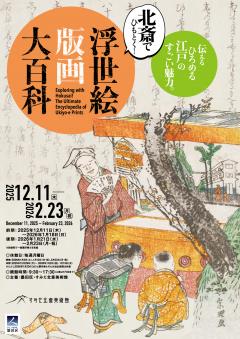
Exploring with Hokusai! The Ultimate Encyclopedia of Ukiyo-e Prints
- Thu, December 11, 2025 - Mon, February 23, 2026
-
Each brush-drawn painting is a unique work. In contrast, ukiyo-e prints were mass produced and sold commercially. Since people visiting Edo would purchase prints to take home as souvenirs, they circulated widely. Today, ukiyo-e prints, including, of course, Hokusai’s Under the Wave off Kanagawa, from the series Thirty-six Views of Mount Fuji, are known throughout the world. Those mass-produced works have been scattered here and there, giving many people opportunities to see them.
Ukiyo-e prints were also a medium for communicating information. And still are: these prints give us glimpses of the everyday lives of people in Edo. In this exhibition, we focus on ukiyo-e prints, exploring their history, the techniques used, and their themes. Please enjoy the wide-ranging appeal of ukiyo-e prints.